

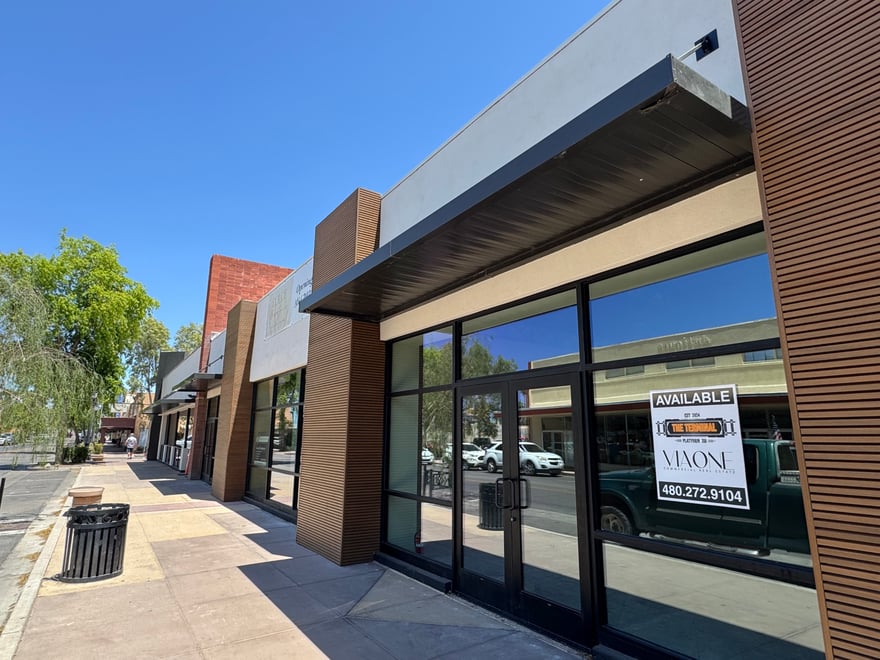
A Commercial Tenant Improvement (TI) loan is a short-term financing solution used to renovate or stabilize retail, office, or industrial spaces to meet specific tenant needs. Much like residential fix-and-flips, commercial rehabs can be a smart investment. This type of real estate investment applies to retail, office, industrial, or multifamily buildings that you can improve and sell, or hang onto for ongoing revenue.
However, finding funds for commercial tenant improvements can be challenging because few lenders offer these types of loans. When you find a lender you trust, you have the potential to build new income streams through commercial real estate.1
Don’t get stuck with a commercial property you can’t lease or sell because of its condition. Instead, find a commercial TI loan that works for you.
Quick Summary
This article covers the basics of commercial TI loans, including these essential takeaways:
- Improve your property. A commercial TI loan allows you to stabilize a building so you can generate more income.
- Consider your options. Unfortunately, they are few, but you can explore traditional banks, SBA loans, other investors, and hard money loans.
- Get the benefits of hard money. Private hard money loans offer availability, speed, and flexibility.
Why Get a Commercial TI Loan?
If you own a commercial building or are considering buying one, it might be necessary to make improvements or convert to a use type that’s more marketable. Whether you plan to rent it out for passive income or improve the property so you can sell it at a better price, commercial rehabs can be a smart investment.
Some of the most common commercial rehab scenarios include:
- Vacant buildings that need to be updated to meet code requirements before being rented
- Buildings that are partially occupied with units that are underutilized
- Full conversions from one use type to another, for example, from office to hospitality
- Fitting out a commercial space for a new tenant with specific needs
Unless you have significant cash reserves, you’ll probably need a loan to cover expenses such as:
- Performing site work
- Bringing a building up to code
- Upgrading systems
- Installing modern finishes and fixtures
What Do Borrowers Need to Know About Commercial TI Loans?
Lenders can provide funds based on what the value of the property will be by factoring in the estimated stabilized value. This allows you to get a larger loan. They can also have the interest built into the loan, ensuring you’re able to make payments while the project is under way. The property is typically not income-generating until finished, so make sure your loan is built for success and allows you to keep the project moving.
Once your loan is approved, you can begin your commercial rehab project. Funds are released in draws as work is completed in phases, so be prepared to get lien waivers from builders and provide any other requested documentation.
Beware of under-budgeting (and over-spending) if you don’t have cash reserves. Make sure you can complete the project with the funds available, because you might not be able to get more.
What Are the Options for Commercial TI Loans?
Although commercial rehabs happen all the time, there are surprisingly few lenders that offer loans for tenant improvements. Your options might include:
1. Traditional Bank Loans
Most banks don’t offer commercial TI loans, and even if they do, your property might not qualify. Some banks require the owner to occupy a certain percentage of the building, and they often don’t lend on commercial properties with high vacancy rates. If you do manage to find the lending sweet spot, it takes a long time to close, so you might miss out on valuable investment opportunities.
2. Small Business Administration (SBA) Loans
Borrowers who qualify for loans from the SBA must meet certain requirements, including occupying at least 51 percent of the property. This might work for certain business owners, but these loans are simply not suitable for investment properties. If you do decide to pursue an SBA loan, expect a slow process and a lot of paperwork.
3. Other Investors
Cash for commercial tenant improvements could come from other investors, but you’ll likely have to give up some equity. It also takes time to recruit and reach agreement, and you’ll need an exit strategy that aligns with your investment goals.
4. Hard Money
Hard money lenders offer more flexibility than traditional banks while allowing you to keep all of your equity. The loan value is based on the equity you have in the property and the stabilized value. This type of loan is also good if you’re light on cash reserves because most other lenders require some level of reserves.
Why Choose Socotra Capital?
Socotra Capital offers commercial TI loans that allow you to move quickly in any asset class, including retail, office, industrial, special purpose, and almost any other type of commercial project. With interest reserves built in, once you close, all the money will be there, and you don't have to worry about carrying the loan.
Ready to get your commercial rehab going? Apply for a Commercial TI loan with Socotra Capital today.
1 https://www.deloitte.com/us/en/insights/industry/financial-services/financial-services-industry-outlooks/commercial-real-estate-outlook.html


.jpeg?width=960&length=960&name=Blog%2099%20-%20Maximizing%20Your%20Commercial%20Real%20Estate%20Investment%20(1).jpeg)