

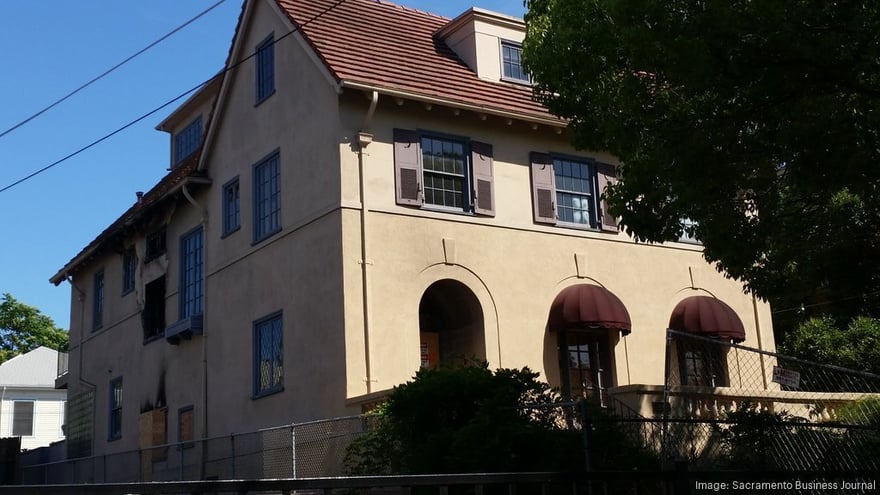
A 111-year-old Sacramento landmark, vacant for approximately seven years and damaged by neglect, vandalism, and fire, is now being restored as part of an 11-suite hospitality operation. The borrower behind the project had a net worth north of $20 million and substantial real estate experience, yet traditional banks still turned the deal down.That common disconnect between “creditworthiness” and “financeability” is where hard money loan liquidity comes to the rescue. This case study breaks down what liquidity means in private lending, how underwriting differs from that of a conventional bank, and how one Sacramento investor worked closely with Socotra Capital to expand a growing hospitality business rather than let a historic property sit vacant for an eighth year.
Quick FAQ: Liquidity & Cash Reserves in Hard Money Lending
What is hard money loan liquidity?
Liquidity, in this context, is how quickly capital can be deployed against real property to fund a transition, renovation, or expansion project. Traditional financing ties up equity behind slow approval cycles. Private financing grants access to that equity faster by using the asset itself, not a multi-month underwriting queue, as the basis for the loan.
Why do lenders evaluate cash reserves?
Hard money lender cash reserve requirements exist to protect the deal, not just the lender. Renovation projects, especially historic ones, often run into surprises: fire remediation, title issues, permitting delays, cost overruns. A lender that confirms the borrower has reserves behind the project is confirming that the project can absorb surprises without incurring additional delays.
What are standard private money loan qualifications?
Private money loan qualifications center on three things: the value of the asset, the borrower's track record, and the exit strategy. A bank's underwriting starts with debt-service ratios and works outward. A hard money lender starts with the property and the plan—what it's worth, who's executing, and how the loan is repaid—and builds the qualification around that.
Hard Money vs. Traditional Bank Underwriting
Conventional underwriting is built for standard deals. It relies on strict global debt-service coverage, clean appraisals, and title histories with no open questions. That works well for a straightforward purchase, but not as well for a complex one.
Hard money underwriting criteria run differently, prioritizing:
- Speed: Decisions and closings are measured in days or weeks.
- Asset-based leverage: The loan is sized against the property's value and the project's potential, not solely the borrower's existing debt load.
- Flexible draw structures: Construction funds are released on a schedule that matches a project’s needs.
Conventional lenders often decline complex deals for reasons that have nothing to do with whether the deal makes sense. For example, a lower-than-expected appraisal, unresolved legacy title issues from prior ownership, or the added complexity of a historic restoration can all cause traditional banks to turn away. None of those point to a bad investment, but rather to a deal that doesn't fit standard underwriting criteria.
Conventional banks often stall complex expansion projects like this one because of rigid debt-service coverage ratios (DSCR), valuation shortfalls, and legacy title encumbrances. That's exactly the situation Socotra Capital stepped into next door to Sacramento's Vizcaya venue.
A Case Study: Expanding Sacramento's Historic Vizcaya Venue
The Briggs Mansion is situated at 2015 21st Street in Midtown Sacramento, California, a historic property named for Wallace and Ella Briggs, two renowned physicians. The mansion sat vacant for roughly seven years, changing hands multiple times and enduring break-ins, vandalism, and eventually fire damage. The residence is protected by a historic designation, which means restoration comes with additional levels of coordination and compliance.
The Opportunity
The borrower, owner of the neighboring Vizcaya hospitality and event venue, saw the mansion not as a standalone speculative project but as the next chapter of an existing business. Vizcaya's existing bed-and-breakfast had just three guest units. Restoring and adapting the Briggs Mansion meant adding eight new suites, and in doing so, growing the operation from three units to 11.
The Challenge
On paper, the borrower looked like an easy yes: roughly $20 million in net worth, substantial real estate experience, and a second hospitality property already operating in the Sierra Foothills.
In practice, several factors made the deal difficult for conventional lenders to underwrite:
- Debt-service load: The borrower's existing obligations (other properties, ongoing business operations, and a separate project also seeking financing) added up to a heavy overall debt load, even though this individual deal stood on its own. It's a common strain on real estate investor liquidity: Lenders underwrite the combined debt load, not the strength of any single asset.
- Appraisal shortfall: The appraisal came in below the borrower's projections, widening the gap between loan proceeds and total project cost.
- Title complexity: Years of ownership turnover left the title with legacy encumbrances and unresolved tax issues from prior owners.
- Historic property complexity: The building’s historic designation added coordination and compliance requirements, while fire remediation increased the project’s cost and execution complexity.
The borrower pursued a conventional path first, including a direct referral from Socotra Capital to First Northern Bank, to see whether a traditional structure could work. It couldn't, however, because it didn't fit the leverage and execution requirements a conventional lender needs to say yes.
Socotra’s Solution
Socotra Capital structured a $1,832,500 loan at approximately 65 percent loan-to-cost, a leverage point more favorable than the alternatives the borrower had explored.
Construction lending often stalls when it comes to the details: how quickly draw requests are reviewed and how much friction a contractor absorbs while waiting on funds. Keith Torres met directly with the borrower and general contractor before closing to explain Socotra’s draw procedures. The clarity and anticipated responsiveness of that process were important considerations for a contractor concerned about cash-flow delays.
And when the borrower initially stepped away from the deal to explore other options, Socotra Capital continued to engage, ultimately providing the flexibility that got the project underway.
The Exit Strategy
The plan is straightforward: The borrower will refinance into conventional commercial financing once the expanded lodging operation stabilizes. Hard money isn't meant to be permanent capital. It’s meant to support the phase of the project where the finished asset doesn't yet exist for conventional underwriting to evaluate. Once the Briggs Mansion is generating income as an 11-suite operation, it becomes the kind of stabilized, cash-flowing property a traditional lender can finance.
Strategies for Balancing Leverage and Cash Reserves
Every real estate investor faces the same dilemma: how to leverage enough to move on opportunities without cutting reserves so thin that a problem on one project puts the whole portfolio at risk.
A few principles to apply to your next deal:
- Underwrite your own reserves. Treat a lender's cash reserve threshold as a starting point rather than the target. Historic and value-add projects especially tend to surface costs no one priced in at the start.
- Match leverage to project complexity. A project with title issues, entitlement risk, or structural unknowns generally warrants more conservative leverage than a straightforward acquisition, regardless of the amount the property is worth.
- Size draws to real progress. A draw schedule that releases funds faster than the work is completed leaves less reserve to fall back on if something goes wrong. One that releases funds too slowly can leave the contractor without the cash flow to keep the project moving. Either way, it works against the project.
- Plan the exit before you need it. Know what "stabilized" means for your project, and what it takes to refinance into permanent financing, before the bridge loan comes due.
How Socotra Evaluated This Transaction
For the Briggs Mansion project, Socotra considered the borrower’s experience, project budget, requested leverage, rehabilitation plan, and proposed refinance exit. The team also addressed construction funding directly with the borrower and general contractor before closing, providing greater clarity around the draw process for a complex historic renovation.
Next Steps
Founded in 2008, Socotra Capital has completed over 2,000 loan transactions totaling more than $2 billion, helping real estate professionals finance projects that may not fit conventional lending parameters.
If your next project doesn't fit inside a conventional underwriting box, that's usually a sign it needs a different kind of lender. For more information about the opportunities available to you as a borrower, browse our latest resources:
- The Borrower’s Guide: Process, Preparedness, and Timeline
- Hard Money vs. Traditional Bank Loans
- Fix-and-Flip Loan Options
- FAQs: For Borrowers and Brokers
Ready to begin your loan application process? Speak with our team today to learn more.